
Small Plastic Household Items Wholesale: How Mixed Container Loading Works
More SKUs, Smaller Pieces: Why the Two Go Together
Most buyers looking for household plastic items come to China with one assumption: the supplier who can offer the best price is the one running the biggest machines on the biggest products. In practice it works the other way round. The buyers who get the lowest landed cost per container are usually the ones buying small items in many SKU lines, loaded together, not the ones buying a single large product by the pallet.
The reason is simple. A large storage box at 400 to 600 grams per piece fills a container quickly, but it also fills your working capital quickly, because one SKU means one big commitment, one big mould cost and one big minimum order. Twenty small items at 5 to 120 grams each give you twenty chances to sell, a much lower entry cost, and a container that can be assembled from categories your customers actually stock together: kitchen, bathroom, fridge, laundry.
This guide explains how mixed container loading works on our side, what it costs in practice, and which mistakes make a mixed order more expensive than a single-product order.
The Maths of a Mixed Container
Container capacity is the first thing to get right, because everything else in a mixed order is built on it. Standard working figures for cartons:
- 20GP — roughly 28 m³ usable, practical payload around 17 to 20 tonnes depending on the shipping line
- 40HQ — roughly 68 m³ usable, practical payload around 20 to 22 tonnes
Note the gap between the two numbers. Volume grows about 2.4 times from 20GP to 40HQ, but payload grows only slightly. That imbalance decides the whole strategy for small plastics: light, bulky items (bins, baskets, trays) are volume-limited, so a 40HQ is almost always the better buy. Dense, small items (pegs, clips, hooks, parts boxes) are weight-limited, so a 20GP can hit the payload limit before it runs out of space.
That is why a good mixed order is designed around a single question: is this container going to run out of cubic metres, or out of kilos? Once you know that, you know which categories to add and which to leave for the next shipment.
Which Small Items Actually Fill a Container
Not every small item is worth mixing. The ones that work in combination share three properties: they are light enough to be volume-limited rather than weight-limited, they are sold in the same retail channels, and they stack or nest so the carton fill rate stays high.
Our own small-item range falls into four groups that load well together:
- Laundry and utility — pegs, clips, hooks. Very light, very high piece counts per carton, and the natural add-on to any household order.
- Kitchen smallwares — ice cube trays, measuring spoons, peelers, spice jars. Moderate weight, and they sit in the same aisle as storage containers at retail.
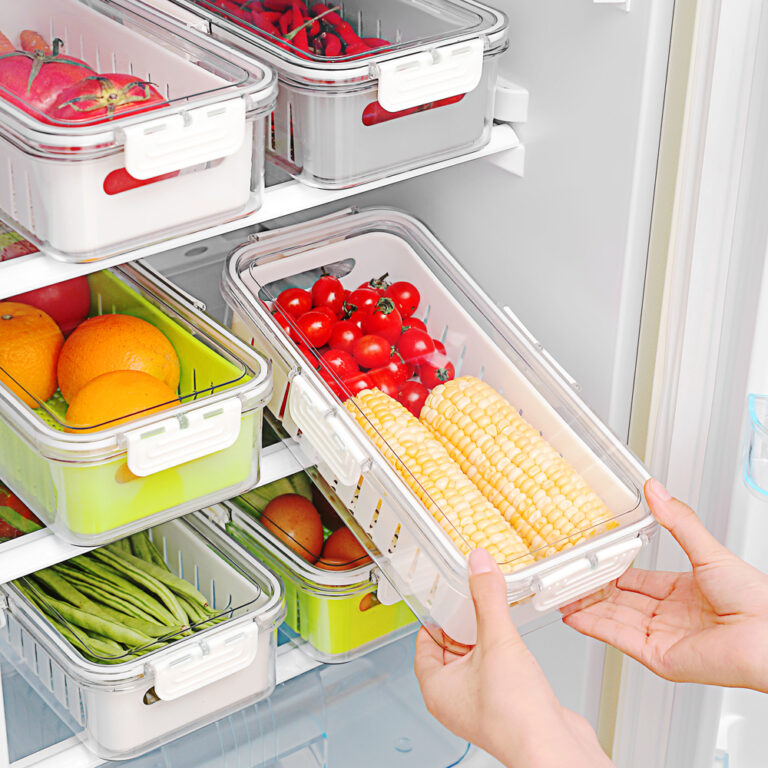
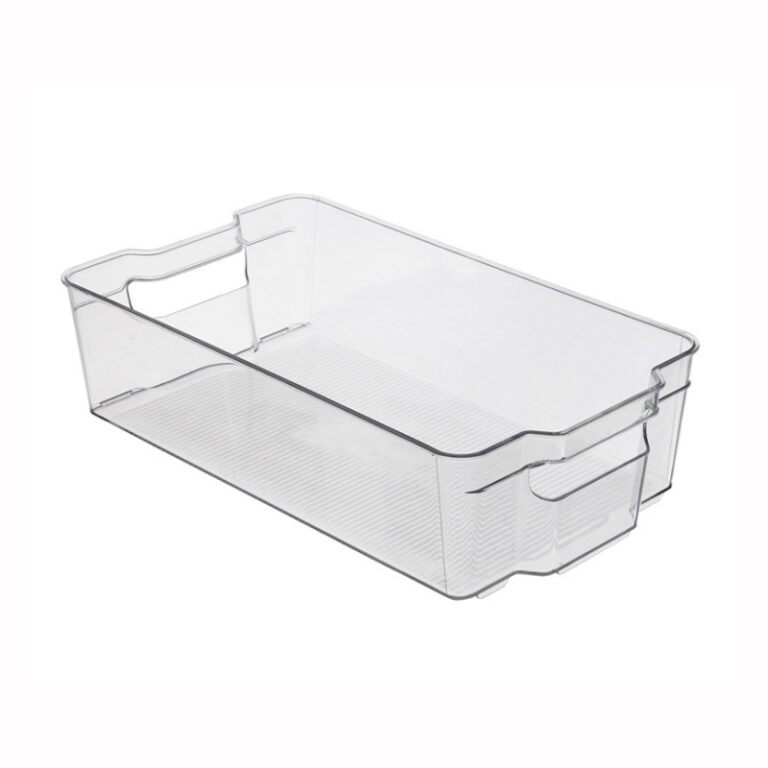
- Storage and organisation — small bins, drawer dividers, parts boxes, desktop organisers. These are the volume drivers of the mix.
- Bathroom and car — soap dishes, toothbrush holders, tissue boxes, small waste bins. Low weight, and they let a buyer cover a second and third retail category without a second supplier.
A typical first mixed order we quote runs 8 to 12 SKUs drawn from at least three of those groups, with two or three of them carrying most of the volume.
MOQ and Trial Orders: The Small-Item Advantage
This is where small items change the economics of a first order. For products we already have a mould for, our minimum order is 300 to 2,000 pieces, and the exact figure depends on the item and the packing size — a peg at 5 grams and a bin at 400 grams do not sit at the same point in that range.
Put that against a container. A buyer testing a new supplier can place 500 pieces of six items, confirm quality across a full category spread, and still keep the total below what a single large-product order would cost. If the quality holds, the second order can combine everything into one container with proper carton counts. If it does not, the loss is small and the relationship ends quickly, which is exactly what a trial order is for.
For new products that need a mould built, the volume has to be higher and the tooling cost has to be agreed before production. We quote the mould from your drawing and dimensions, and the party who pays for the tooling is negotiable — if the buyer pays it, we can reduce the MOQ. Sampling runs 3 to 15 days depending on shape, colour and finish; bulk production 15 to 25 days after sample approval.
Tooling: Multi-Cavity Is the Whole Game
Small items are a tooling business, not a machine business. At 5 to 15 grams per piece, the mould cavity count decides your unit cost far more than the machine does. A 32-cavity tool on a small machine produces more pieces per hour than a 4-cavity tool on a large one, at a fraction of the energy and labour per piece.
This is also why small items suit factories with mixed machine sizes. A 100 to 200 gram shot machine is not a limitation for a peg or a hook — it is the right machine, and it can run 24 to 32 cavities comfortably. Large machines are needed only for the 300 to 600 gram items in the same range, such as bins and baskets.
For buyers, the practical consequence is that unit price on small items should be quoted per thousand pieces, not per piece, and the cavity count should be stated in the quotation. If a supplier quotes a clip at a very low price without telling you the cavity count, either the tool is already amortised or the wall thickness has been cut to save cycle time. Our buyer’s guide to choosing a manufacturer covers how to check this before you place a mould order.
Packing Formats Decide Your Landed Cost
Two factories can quote the same clip at the same price and still deliver a 15 percent difference in landed cost, because the difference is in the carton. For small plastics, packing is not a detail — it is the main lever after the unit price.
Four formats, and what each does to your cost:
- Bulk polybag — lowest packing cost per piece, highest pieces per carton. Right for wholesalers who re-pack, and for marketplace sellers who ship their own.
- Hanging card / blister — adds retail-ready presentation, and cuts pieces per carton by 30 to 50 percent because the card takes volume. Right for retail chains, wrong for anyone buying by the pallet.
- Printed colour box — highest cost, but it protects the item and carries your brand. Needs a print run of 【confirm with your printer】 boxes to be economic.
- Shrink wrap / tray pack — the middle option, good for sets such as measuring spoons where the set must stay together.
Ask for the carton dimensions, the pieces per carton and the gross/net weight in the quotation, not after the order. Without those numbers you cannot calculate how many cartons fit the container, and a mixed order without carton data is a guess.
Six Mistakes That Cost Buyers Money
- Mixing too many SKUs in one container. Twelve lines is workable. Thirty lines means thirty carton counts, thirty packing specs and a high chance of a picking error at loading.
- Ignoring the volume-to-weight balance. A container of dense parts boxes reaches the weight limit at about 60 percent fill, and the empty space is paid for at the same freight rate.
- Ordering retail packing for a wholesale channel. Hanging cards can cut pieces per carton by half, and the freight per piece doubles.
- Not specifying wall thickness. On small items, 0.2 mm of wall is the difference between a clip that lasts and one that fails in a season, and it is invisible in a photo.
- Comparing quotes without cavity count. A price per piece with no tooling context cannot be compared across suppliers.
- Leaving the trial order too small to be representative. 300 pieces proves the colour and the packing; it does not prove consistency across a production run. Plan the second order with a proper sample drawn from bulk.
How to Plan a First Mixed Order
A workable sequence, in the order that avoids rework:
- Pick the channel, not the products. Decide whether the goods go to a wholesaler, a retail chain or a marketplace seller, because that determines the packing format before anything else.
- Choose three categories. For household plastics, kitchen, storage and bathroom cover most retail aisles. Three categories give the buyer a coherent range and give the container a natural volume base.
- Fix two volume drivers and the rest as add-ons. Bins and organisers fill cubic metres; pegs, clips and hooks fill the gaps in the carton count.
- Ask for a carton schedule before confirming. Pieces per carton, carton dimensions, gross weight, and how many cartons fill a 20GP or 40HQ. Any supplier who cannot produce this is not ready to ship a mixed order.
- Run the trial on the highest-risk item, not the cheapest. If a supplier can hold quality on the most complex item in the mix, the simple ones follow.
- Lock the loading plan into the PO. Mark sequence and carton labels, so the container is loaded in the order the buyer unpacks it.
If your range also includes larger pieces, our guide to household storage organizers wholesale covers the specification questions that matter for bins and boxes, and the OEM and ODM guide explains how tooling cost and MOQ interact when you want your own design.
Frequently Asked Questions
What is the smallest order you accept for a mixed container?
There is no fixed container minimum. Each item has its own MOQ of 300 to 2,000 pieces for existing moulds, and the container is assembled from those lines. In practice a first mixed order that makes economic sense starts around 8 to 12 SKU lines.
Can you mix items from different categories in one container?
Yes. Kitchen, bathroom, storage and laundry items load together routinely. What matters is the carton schedule, since each line has its own pieces per carton and carton size.
How long does a mixed order take to produce?
Sampling runs 3 to 15 days depending on shape and finish. Bulk production is 15 to 25 days after sample approval. Mixed orders do not add production time, but they do add packing time, so allow a few extra days for orders above about ten lines.
Do you provide the carton and pallet plan?
Yes. Every quotation for small items states pieces per carton, carton dimensions and gross weight, and we can prepare a loading plan for a 20GP or 40HQ once the line list is fixed.
Is food-contact certification available for kitchen items?
Several of our items are already LFGB certified. For most products, certification can be arranged to the requirement of your market when the material and the application allow it, and it can be issued for your own brand.
Which items are best for a first trial?
The most complex item in the mix, not the cheapest. If the supplier holds quality on that one, the simpler lines usually follow. For most household ranges that means a storage bin or a set such as measuring spoons rather than a single peg.
Start With One SKU, Not Fifteen
The natural instinct on a first order is to spread the risk across many lines. In practice it works better to start with one item that tests the supplier’s real capability, then build the mixed container around it once quality is confirmed. Mixed loading is not a discount trick — it is a way of buying a full range without committing to a full range at once.
Send us the item list, the target channel and the quantities you have in mind, and we will reply with a carton schedule and a quotation. Product pages for our small items are in the full catalogue, including storage boxes with handle, clear fridge bins, catering holders and bathroom holders. For a quotation, use the contact form.
Costar Plastics, China home plastic products wholesale manufacturer, OEM/ODM.